
- Details
- Written by: Edvardsen
- Hits: 232
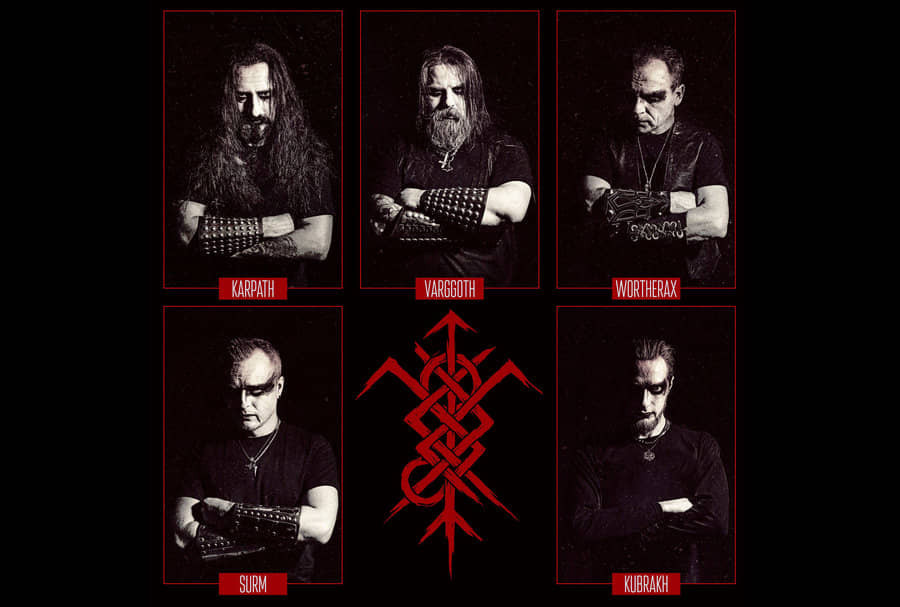
Nokturnal Mortum return with new material! Their new EP, “Біль | Hurt”, will be released on September 25th via Oriana Music.
“Біль | Hurt” is a new 2026 EP by NOKTURNAL MORTUM that opens the gate for the forthcoming full-length album. The heart of “Біль | Hurt” is “Eight Days to Spring”, one of the most emotionally charged songs the band ever made, born after protesting people getting shot down by criminal government forces at Maidan in the last days of February 2014. Written right after those tragic events the song did not make it to any NOKTURNAL MORTUM record because of its very special mood, but now this dedication to human bravery is about to be released exclusively on A side of “Біль | Hurt” EP, where it is framed by two conceptual electronic compositions. Side B presents the new studio versions of well-known band’s gems “The Forgotten Ages of Victories” and “Weltanschauung”, created during “До лунарної поезії | To Lunar Poetry” session, and live version of “Ukraine”, an ultimate metal anthem and fans favorite. This EP is more than forty minutes of great music and a signal to wait for coming full-length strike!
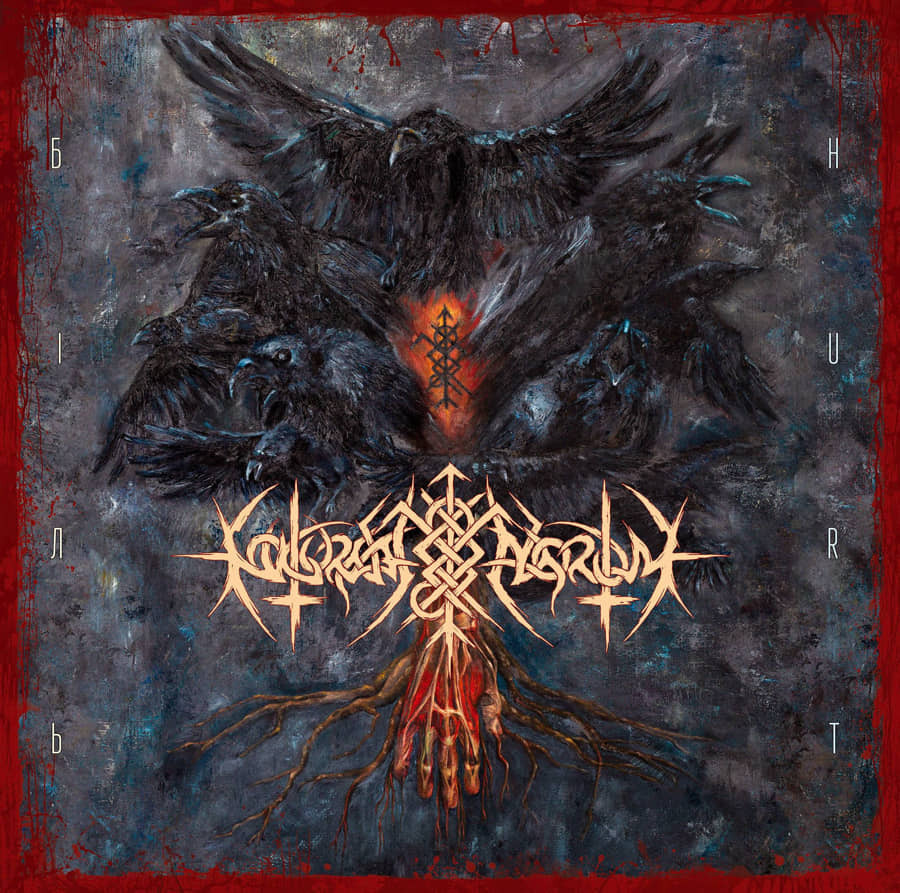
Track list:
01. To Those Who Went Down the Tysyna River
02. Eight Days to Spring
03. First Steps of Freedom... The Flavor of Doom in Eight Years
04. Weltanschauung
05. The Forgotten Ages of Victories
06. Ukraine [Live]
NOKTURNAL MORTUM is a band that possesses the very special place in the landscape of the world metal music. What was started in the New Year’s night of 1992 as pure death metal under SUPPURATION moniker, gained the true attention of the fans under new name in the mid 90’s, when such masterworks as “Twilightfall” (1995), “Lunar Poetry” (1996) and “Goat Horns” (1997) delivered the unique synthesis of refined melodic and symphonic black metal with the heritage of Ukrainian folk music, not only in terms of musical form, but on the deepest spiritual level. The path continued with barbaric fury of “To the Gates of Blasphemous Fire” (1998) and “Nechrist” (1999), with even more epic style demonstrated in the new century on “Weltanchauung” (2005) and flourishing otherworldly progressive mastery on “The Voice of Steel” (2009). “Verity” (2017) took the band into even more obscure mazes of pre-historic and subconscious thinking just to be followed by “To Lunar Poetry” (2022), updated full-length version of now-legendary demo work. The year of 2026 is about to bring new NOKTURNAL MORTUM works out of the blacksmiths of inspiration into the dark of modern crazed world.
ONLINE
LINEUP
Wortherax - Guitars
Knjaz Varggoth - Vocals (lead), Guitars, Keyboards, Weellyre, Drymba, Telynka, Kobza, Percussion
Karpath - Bass
Odalv - Drums
Surm - Keyboards, Dulcimer, Pipes
BIOGRAPHY/LOGO
Nokturnal Mortum is a Ukrainian black and folk metal band from Kharkiv, formed in 1994 and widely regarded as one of the most distinctive and influential acts to emerge from the Ukrainian extreme metal underground. Throughout a career spanning more than three decades, the band has developed an immediately recognizable sound combining atmospheric and symphonic black metal with epic compositions, traditional Ukrainian folk music and an increasingly prominent use of native instrumentation.
The group's origins can be traced back to 1991, when vocalist and guitarist Knjaz Varggoth, bassist Xaarquath and drummer Munruthel formed the death metal band Suppuration. The musicians subsequently continued as Crystaline Darkness before adopting the name Nocturnal Mortum in 1994. The spelling was soon changed to Nokturnal Mortum, distinguishing the band from other similarly named acts.
Their earliest recordings revealed a group still searching for its musical identity. The 1995 demo Twilightfall combined elements of doom, death, gothic and melodic metal while already displaying the Ukrainian folk influences that would eventually become one of the band's defining characteristics. Later the same year, Black Clouds over Slavonic Lands marked a stronger movement towards black metal.
With the 1996 demo Lunar Poetry, Nokturnal Mortum established much of the sound for which they would become known. Raw black metal guitars and harsh vocals were surrounded by prominent keyboards, sweeping melodies and folk-inspired passages, creating an unusually rich and atmospheric approach to the genre.
The band's first official full-length album, Goat Horns, followed in 1997. Its combination of aggressive black metal, extensive keyboards and Slavic folk melodies helped establish Nokturnal Mortum internationally and remains one of the landmark recordings of their early period. The album was followed by To the Gates of Blasphemous Fire in 1998 and Нехристь (NeChrist) in 1999, further developing their increasingly epic and distinctly Eastern European interpretation of black metal.
During this period the band also became highly controversial because of nationalist, racist and antisemitic themes and its association with the National Socialist black metal scene. These political associations became an inseparable part of the controversy surrounding Nokturnal Mortum and resulted in considerable criticism and isolation from parts of the international metal scene. In 2014, the band publicly stated that it had moved away from its previous racist and far-right political views, although controversy concerning its past and subsequent associations has continued.
Musically, Nokturnal Mortum underwent considerable development during the following decade. The EP The Taste of Victory appeared in 2003 and offered an early indication of the increasingly monumental direction that would dominate the band's subsequent work.
This development reached a new level with Мировоззрение (Mirovozzrenie) and its English-language counterpart Weltanschauung. Released in 2005, the material combined black metal with increasingly elaborate folk arrangements, progressive structures and a powerful sense of atmosphere. Traditional instrumentation became more deeply integrated into the compositions rather than functioning merely as decoration around the metal foundation.
The transformation culminated in 2009 with The Voice of Steel (Голос Сталі). Frequently regarded as one of Nokturnal Mortum's defining works, the album expanded the band's music into lengthy, highly dynamic compositions in which black metal, folk music, progressive elements, keyboards and traditional instruments coexist naturally. Rather than simply reproducing their earlier symphonic black metal style, Nokturnal Mortum had developed into an epic folk-oriented metal band with a sound largely their own.
After another lengthy period between studio albums, Nokturnal Mortum returned in 2017 with Істина (Verity). Darker and more introspective than its predecessor, the album continued the band's fusion of extreme metal and Ukrainian traditional music while placing considerable emphasis on atmosphere and sophisticated arrangements. Numerous traditional instruments and guest musicians contributed to the recording, further expanding the band's already broad musical palette.
In 2022 the band revisited its earliest era with До лунарної поезії (To Lunar Poetry). Rather than functioning as a straightforward reissue, the album presented newly recorded and substantially reworked versions of compositions originating primarily from Lunar Poetry and other material from the band's formative years. Modern production, heavier arrangements and expanded folk instrumentation gave the compositions a noticeably different character while retaining the melodies and atmosphere of their original versions.
Throughout numerous personnel changes, Knjaz Varggoth has remained the central figure and creative force behind Nokturnal Mortum. Over the years the band's instrumentation has expanded far beyond the conventional guitar, bass and drums format, incorporating keyboards and traditional instruments such as dulcimer, sopilka, jaw harp and other elements of Ukrainian folk music.
From the raw and atmospheric recordings of the mid-1990s to the expansive folk metal compositions of The Voice of Steel, Verity and To Lunar Poetry, Nokturnal Mortum have undergone a remarkable musical evolution. Their history remains inseparable from serious controversy surrounding their earlier ideology, but from a purely musical and historical perspective, their combination of black metal, symphonic arrangements and Ukrainian folk traditions has made them one of the most recognizable bands to emerge from Ukraine's extreme metal scene.
DISCOGRAPHY
Twilightfall (Demo, 1995)
Black Clouds over Slavonic Lands (Demo, 1995)
Lunar Poetry (Demo, 1996)
Return of the Vampire Lord (EP, 1997)
Marble Moon (EP, 1997)
Goat Horns (Album, 1997)
To the Gates of Blasphemous Fire (Album, 1998)
Нехристь / NeChrist (Album, 1999)
The Taste of Victory (EP, 2003)
Мировоззрение / Mirovozzrenie (Album, 2005)
Weltanschauung (Album, 2005)
The Voice of Steel / Голос Сталі (Album, 2009)
Live in Katowice (Live Album, 2009)
Коловорот / Kolovorot (Live Album, 2011)
Orathania / Kolyada (EP, 2017)
Істина / Verity (Album, 2017)
До лунарної поезії / To Lunar Poetry (Album, 2022)
Oberig – Live at Ragnard Reborn Fest (Live Album, 2024)
Біль | Hurt (EP, 2026)
GENRE/COUNTRY
Symphonic Black Metal/Folk Metal
Ukraine

